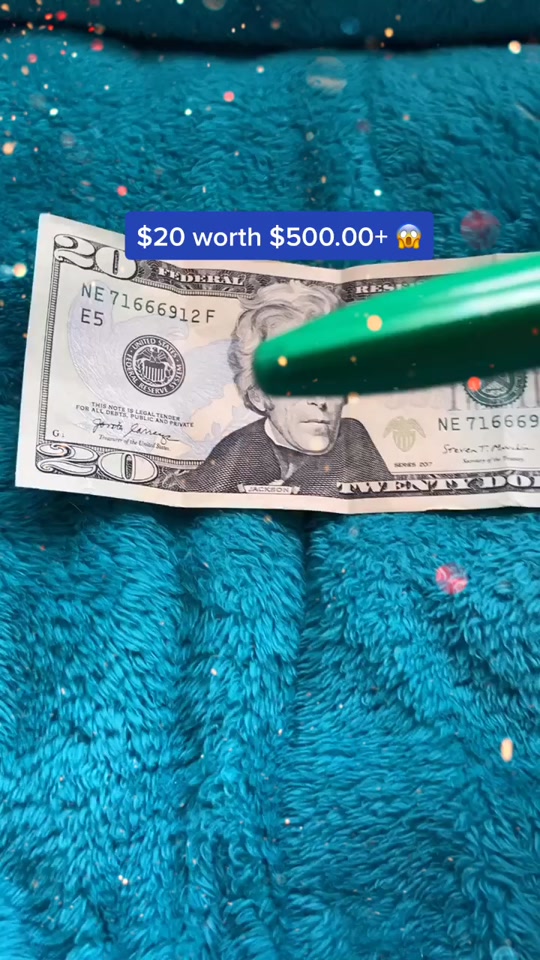
$20 Bill Worth $500 or More?
Most people never look twice at the cash in their wallet.
But some U.S. paper money contains printing errors that make it highly collectible. One of the most sought-after mistakes is the mismatched serial number error, where the two serial numbers printed on the front of the note don’t match.
While these errors are rare, authenticated examples can sell for far more than their face value.
Let’s look at how to check your $20 bill step by step.
🧐 What Is a Mismatched Serial Number Error?
Every genuine U.S. banknote has two serial numbers printed on the front.
Under normal circumstances, both serial numbers should be identical.
A mismatched serial number error occurs when:
✅ One or more digits are different
✅ The serial numbers don’t match exactly
Because these mistakes escape the Bureau of Engraving and Printing’s quality control, they are highly collectible.
🔍 Step 1: Find the Serial Numbers
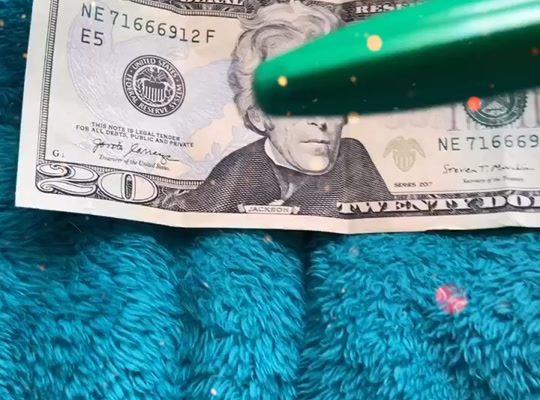
Take out any U.S. $20 bill.
On the front of the note, locate the two green serial numbers.
These should match perfectly.
🔍 Step 2: Compare Every Digit Carefully
Check both serial numbers one digit at a time.
Look for:
✔ A different number
✔ A missing digit
✔ An extra digit
✔ Incorrect sequence
Even a single mismatched digit can indicate a genuine printing error—but it should be professionally verified.
🔍 Step 3: Check for Other Printing Errors
Collectors also search for:
🪙 Misaligned serial numbers
🪙 Offset printing
🪙 Missing overprints
🪙 Ink smears
🪙 Fold-over errors
Multiple genuine printing errors on the same note may increase collector interest.
💰 How Much Could a Mismatched Serial Number Bill Be Worth?
There is no fixed price for error notes.
Value depends on several important factors:
✅ Type of error
✅ Visibility of the mistake
✅ Condition of the note
✅ Collector demand
✅ Professional authentication
Some authenticated mismatched serial number notes have sold for hundreds or even thousands of dollars, while others sell for less depending on rarity and grade.
🛡️ What Should You Do If You Find One?
If your $20 bill appears unusual:
✅ Do This
✔ Handle it carefully
✔ Store it in a currency sleeve
✔ Take clear photos
✔ Compare it with trusted error note references
✔ Consider submitting it for grading
Trusted grading services include:
🏅 PMG (Paper Money Guaranty)
🏅 PCGS Banknote
❌ What You Should Avoid
Don’t:
❌ Fold the note repeatedly
❌ Write on it
❌ Attempt to repair damage
❌ Clean or press it
Keeping the note in its original condition helps preserve its collector value.
📈 Why Collectors Love Error Notes
Error currency is popular because every mistake tells a story about the printing process.
Collectors enjoy searching for:
💵 Mismatched serial numbers
💵 Inverted overprints
💵 Missing seals
💵 Cutting errors
💵 Offset printing mistakes
These notes are often much scarcer than standard circulation bills.
❓ Frequently Asked Questions
Are all unusual serial numbers valuable?
No. Fancy serial numbers and printing errors are different. Value depends on rarity and collector demand.
Does a mismatched serial number guarantee a high value?
No. The note must first be authenticated, and its value depends on rarity, condition, and market demand.
Should I spend an error note?
If you believe it’s a genuine printing error, it’s usually worth having it examined before spending it.
Can circulated bills still be valuable?
Yes. Even circulated error notes may interest collectors, although condition affects value.
Where can I have an error bill authenticated?
PMG and PCGS Banknote are two well-known professional grading services.
📝 Final Thoughts
Most $20 bills are worth exactly $20.
However, genuine printing errors such as mismatched serial numbers are rare and can attract strong interest from collectors.
Before you spend your next $20 bill, take a few moments to compare the serial numbers. You might discover something far more valuable than ordinary cash. 💵✨