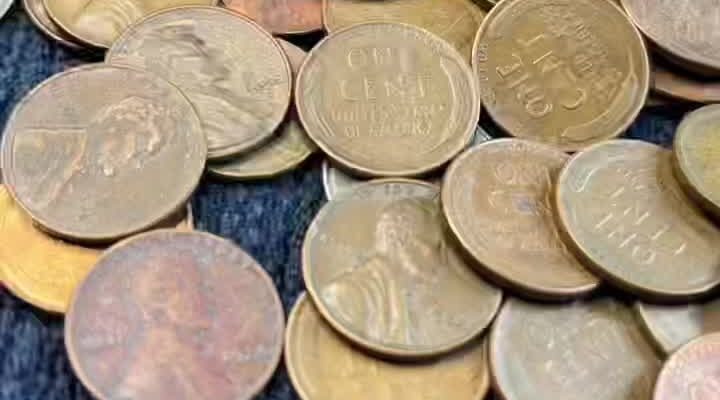
Have you ever wondered if a penny in your collection could be worth hundreds of thousands of dollars? 🤔
If you’ve browsed social media or searched online for valuable coins, you’ve probably come across headlines claiming that a 1958 Wheat Penny sold for an incredible $336,000. Some articles say it’s true, while others dismiss it as a myth.
So, what’s the real story?
Let’s separate the facts from the fiction and discover why the 1958 Doubled Die Obverse (DDO) Lincoln Wheat Penny is considered one of the most sought-after error coins in American history.
🪙 Why Is Everyone Talking About the $336,000 1958 Wheat Penny?
The internet is filled with confusing claims about this famous coin.
Some posts confidently state:
- 💵 “A 1958 penny sold for $336,000!”
- ❌ “That’s completely fake.”
The truth actually falls somewhere in between.
✅ What Is Verified?
A 1958 Doubled Die Obverse Wheat Penny graded PCGS MS64 Red (RD) was sold for $336,000 at a major auction in 2010.
However, this sale involved an extremely rare error coin, not an ordinary 1958 penny.
❌ What Many Posts Get Wrong
Many viral posts show:
- Damaged pennies
- Machine doubling
- Worn circulation coins
These are often incorrectly labeled as the legendary six-figure coin, leading many people to believe every 1958 penny is valuable—which simply isn’t true.
Remember: Auction records and professional grading are the only reliable ways to confirm a coin’s true value.
🔍 How to Identify a Genuine 1958 Doubled Die Obverse Penny
Only a handful of authentic examples are known, making this one of the rarest Lincoln Wheat cents ever discovered.
👤 Check the Front (Obverse)
Start by examining the front of the coin.
Look for:
- 🧔 Abraham Lincoln’s portrait
- 📅 Date: 1958
- 🔠 Strong doubling on:
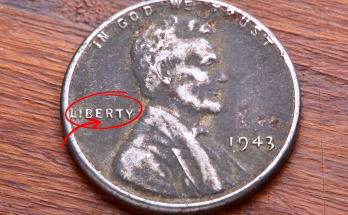
- LIBERTY
- IN GOD WE TRUST
✅ Signs of a Genuine Doubled Die
A real doubled die will display:
- ✔ Raised lettering
- ✔ Clearly separated letters
- ✔ Sharp and bold doubling
- ✔ Visible with the naked eye (although a magnifying loupe makes inspection easier)
❌ These Are NOT Valuable Errors
Don’t confuse a genuine doubled die with:
- Machine doubling
- Die deterioration
- Damage after the coin left the Mint
These conditions generally do not add significant collector value.
🌾 What About the Reverse?
Turn the coin over.
A genuine 1958 Doubled Die Obverse should have a normal reverse.
You should see:
- 🌾 Two wheat ears
- 🪙 ONE CENT
- 🇺🇸 UNITED STATES OF AMERICA
If you notice doubling on the reverse, the coin is not the famous 1958 Doubled Die variety.
💰 Why Can This Penny Be Worth Up to $336,000?
Several factors make this coin exceptionally valuable.
⭐ Reasons Collectors Pay So Much
- 💎 Only a few authentic examples are known.
- 🏛 It was created during the die-making process, producing dramatic doubling.
- 🔍 The error is bold and easy to recognize.
- 📈 Collector demand remains extremely high.
- 🪙 It represents one of the final years of the Lincoln Wheat Cent series.
One professionally graded example achieved $336,000 at auction, while lower-grade authentic specimens have also sold for impressive five-figure prices.
✅ 5 Steps to Check Your 1958 Penny
If you think you’ve found one, use this simple checklist before getting too excited.
1️⃣ Inspect LIBERTY
Look for thick, clearly separated letters.
2️⃣ Examine IN GOD WE TRUST
The lettering should show strong, raised doubling.
3️⃣ Verify the Date
It must read 1958.
4️⃣ Check the Reverse
The back of the coin should appear normal, without doubling.
5️⃣ Get Professional Authentication
If everything looks promising, submit the coin to a respected grading service such as PCGS or NGC.
Professional certification is essential before any high-value sale.
🏆 Why Serious Collectors Want This Coin
Among Lincoln Wheat cents, the 1958 Doubled Die Obverse has earned legendary status because it offers:
- 🪙 Extraordinary rarity
- 🔍 One of the strongest doubled die errors ever produced
- 📜 Historical importance
- 💰 Outstanding auction performance
- ⭐ Strong demand from advanced collectors
For many numismatists, owning one is a lifelong goal.
🏦 Where Can You Sell an Authentic Example?
If your coin is professionally authenticated, consider selling it through well-known auction houses that specialize in rare coins.
Popular choices include:
- 🏛 Heritage Auctions
- 🏛 Stack’s Bowers Galleries
- 🏛 GreatCollections
These companies attract experienced collectors who are willing to pay premium prices for genuine rarities.
⚠️ Never clean your coin. Even gentle cleaning can dramatically reduce its value.
📷 Think You Found One?
Before sending it for grading, take clear photos that include:
- 📸 Front of the coin
- 📸 Reverse of the coin
- 🔍 Close-up of LIBERTY
- 🔍 Close-up of IN GOD WE TRUST
- 💡 Images taken under bright lighting
Good photographs make it much easier for experts to determine whether further authentication is worthwhile.
💡 Why Verification Matters More Than Viral Headlines
The famous 1958 Doubled Die Obverse Wheat Penny is absolutely real—and it has earned its place among America’s most valuable Lincoln cents.
However, only a tiny number of authentic examples exist.
Most coins advertised online as “rare 1958 error pennies” turn out to be:
- ❌ Machine doubling
- ❌ Ordinary circulation wear
- ❌ Damaged coins
- ❌ Misidentified varieties
Careful research and professional grading remain the best ways to separate genuine treasures from internet myths.
❓Frequently Asked Questions
Is every 1958 Wheat Penny valuable?
No. Most 1958 Wheat Pennies are worth only a small premium unless they feature a genuine and authenticated mint error.
How many authentic 1958 Doubled Die Obverse pennies exist?
Only a very small number are known, making this one of the rarest Lincoln cent errors ever discovered.
Should I clean my coin before selling it?
No. Cleaning almost always reduces a coin’s value and can significantly hurt its appeal to collectors.
How can I confirm if my coin is genuine?
The safest option is to submit it to respected third-party grading companies such as PCGS or NGC for professional authentication.
Leave a Reply