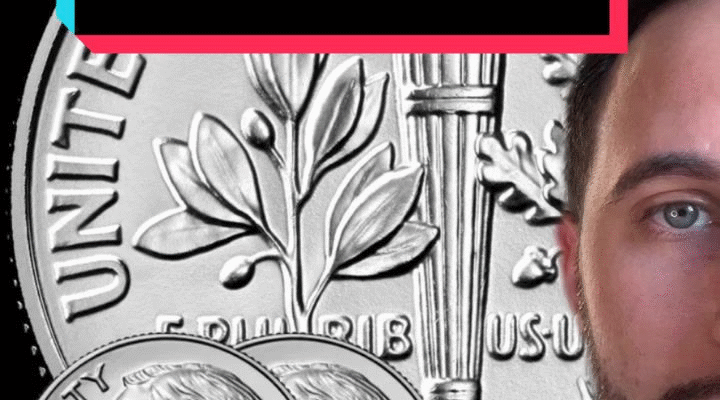
Is the viral 2022 Roosevelt Dime “Burning Branch” error actually valuable? Learn what causes this mint anomaly, why some examples sell for around $13.50, and whether it’s worth grading.


4
Have you seen videos claiming that a 2022 Roosevelt dime with a so-called “Burning Branch” error could be the next valuable coin to own? 🤔🔥
Some social media posts suggest these dimes are becoming rare collectibles, while others point to sales of around $13.50 as proof that they’re worth searching for.
But is this really a newly discovered treasure—or just another internet coin rumor?
Let’s break down the facts so you know exactly what you’re looking at before adding one to your collection.
🪙 What Does a Normal 2022 Roosevelt Dime Look Like?
Before deciding whether a coin has an error, it’s important to know what a normal coin should look like.
👤 Obverse (Front)
A standard 2022 Roosevelt dime features:
- 👤 Portrait of Franklin D. Roosevelt
- 📅 Date: 2022
- 🏛️ Mint mark: P (Philadelphia) or D (Denver), located above the date
🔥 Reverse (Back)
The reverse design includes:
- 🔥 Torch representing Liberty
- 🕊️ Olive branch representing Peace
- 🌳 Oak branch representing Strength
- 🇺🇸 UNITED STATES OF AMERICA
- ⭐ E PLURIBUS UNUM
- 💰 ONE DIME
If your coin matches this design, you have a standard modern Roosevelt dime unless a genuine mint error is present.
🔍 What Is the “Burning Branch” Error?


Despite its dramatic nickname, “Burning Branch” is not an official numismatic term.
The nickname generally refers to a minor strikethrough error that affects part of the olive or oak branch on the reverse.
🛠️ How Does a Strikethrough Error Happen?
During the minting process, small pieces of foreign material—such as:
- Grease
- Metal shavings
- Cloth fibers
- Dirt or debris
can become trapped between the die and the blank coin.
When this happens, part of the design may appear:
- 🔸 Weak
- 🔸 Missing
- 🔸 Distorted
- 🔸 Slightly recessed
Because the affected branch can appear dark or incomplete, collectors began referring to it as a “Burning Branch.”
Once the debris clears, the Mint continues producing normal coins.
💰 Is a $13.50 Sale a Big Deal?


The short answer is not really.
While a few examples have reportedly sold for around $13.50, that price falls within the normal range for attractive modern minor mint errors.
📈 Major Mint Errors
These are the errors that often attract significant premiums:
- 💎 Doubled dies
- 🪙 Off-center strikes
- 🔄 Wrong planchet errors
- 🔀 Mule errors
Some of these coins have sold for hundreds—or even thousands—of dollars.
📉 Minor Mint Errors
The “Burning Branch” variety belongs to a much more common category that includes:
- Grease-filled dies
- Small die chips
- Minor strikethroughs
These typically sell for only modest premiums depending on eye appeal and collector interest.
⭐ Why Isn’t This Error Considered Rare?
Professional coin graders look at several important factors before assigning significant value.


4
✅ 1. Rarity
Minor strikethrough errors occur fairly regularly during modern coin production.
✅ 2. Error Type
This is a temporary striking anomaly, not a major die-creation error.
Collectors generally pay much higher prices for errors created during die manufacturing.
✅ 3. Visual Impact
Most examples show only a small area of missing or weak detail rather than a dramatic mint mistake.
✅ 4. Collector Demand
Interest has largely been fueled by social media rather than long-term rarity.
For these reasons, the “Burning Branch” dime remains an interesting conversation piece—but not a major rarity.
✅ 5-Step Checklist Before Believing a Viral Coin Claim
Whenever you see a coin going viral online, ask yourself these questions.
1️⃣ What Type of Error Is It?
Understand whether it’s a major mint error or a minor striking anomaly.
2️⃣ Is It Really a Mint Error?
Make sure the unusual appearance wasn’t caused by damage after the coin entered circulation.
3️⃣ Have Multiple Coins Sold for Similar Prices?
One unusually high listing doesn’t establish market value.
4️⃣ Ignore Unrealistic Asking Prices
Many online sellers list ordinary coins for hundreds or thousands of dollars—but that doesn’t mean anyone is buying them.
5️⃣ Is It Worth Professional Grading?
For coins worth only a few dollars, grading usually costs more than the coin itself.
🏦 Where Can Minor Error Coins Be Sold?


If you discover a genuine minor strikethrough error, collectors commonly buy and sell them through:
- 🛒 eBay
- 👥 Facebook coin collecting groups
- 🪙 Local coin clubs and coin shows
Major auction houses generally focus on rarer and more valuable coins.
⚠️ Never clean your coin. Even a minor error coin can lose collector appeal if its original surface is altered.
💡 Should You Keep Looking for 2022 Dime Errors?


The viral 2022 “Burning Branch” Roosevelt dime is a genuine mint anomaly—but it’s important to keep expectations realistic.
While examples may sell for a small premium, they are not considered rare, not investment-grade, and generally not worth the cost of professional grading.
Still, learning to recognize minor errors is a valuable skill for every collector. Understanding the difference between common mint anomalies and truly rare errors is one of the best ways to become a more knowledgeable coin hunter.
Sometimes, the most valuable lesson isn’t finding a fortune—it’s learning how to separate facts from internet hype.
❓ Frequently Asked Questions
Is the 2022 “Burning Branch” dime a real mint error?
Yes. It appears to be a minor strikethrough error, although “Burning Branch” is simply a nickname created by collectors online.
Is it worth $13.50?
Some examples have reportedly sold for around that amount, depending on their appearance and buyer interest.
Should I have one professionally graded?
Generally, no. The cost of grading usually exceeds the value of this type of minor error.
Can I still find one in circulation?
Yes. Since these are modern coins, it’s possible to encounter them in everyday pocket change.
Leave a Reply