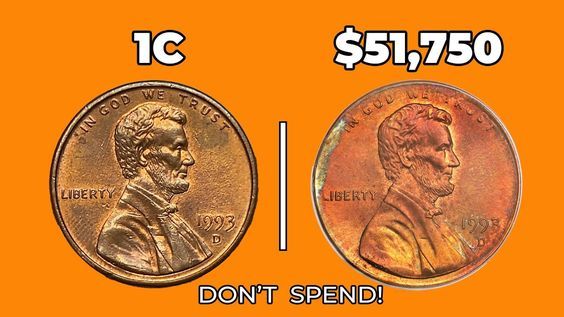
😲 Could a Penny Really Be Worth $51,750?


4
Most people treat pennies as nearly worthless.
But in rare cases, small minting mistakes can turn a 1-cent coin into a collectible worth tens of thousands of dollars. One example often discussed among collectors is the so-called “Double Liberty” penny, reportedly selling for up to $51,750 in high-grade, authenticated condition.
These coins are extremely scarce and require careful inspection and professional verification.
🧠 What Makes the “Double Liberty” Penny So Valuable?
The value comes from a combination of mint error characteristics + extreme rarity + condition sensitivity.
🔑 Key value drivers:
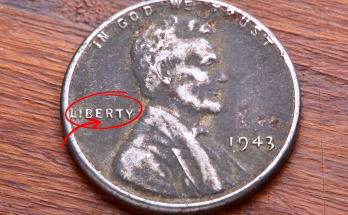
- 🪙 Doubled “LIBERTY” inscription (strong double-die effect)
- 🔍 Minor die anomalies near the date (in rare varieties)
- 🏆 High-grade condition (MS-65 or better)
- 📉 Extremely limited confirmed specimens
- 🧪 Strong collector demand for dramatic errors
When these factors align, even a small cent can become a premium collectible.
🕵️ How to Identify a Double Liberty Penny (Step-by-Step)
🔎 Step 1: Inspect the Obverse (Front)


4
Check carefully for:
- ✨ Visible doubling in the word LIBERTY
- 🔍 Slight shadowing or “ghosting” of letters
- 🪙 Sharp portrait details (Lincoln should not be blurred)
Even slight doubling can indicate a collectible variety.
🔎 Step 2: Examine the Reverse
Depending on the series (Wheat or Memorial reverse), look for:
- 🧭 Unexpected doubling in lettering
- ⚠️ Misaligned design elements
- 🪙 Strike irregularities or distortion
Errors are often subtle but consistent under magnification.
⚖️ Step 3: Check Weight & Composition
While weight alone does not confirm value, it helps eliminate fakes:
- 🟤 Copper cents: ~3.11g
- ⚪ Zinc cents: ~2.5g
Also confirm:
- 🧲 Not magnetic (except rare steel cents)
💰 Reported Auction Results (Verified Grading Only)


Reported sales for similar “Double Liberty” varieties include:
- 💵 $51,750 — MS-65 grade example
- 💵 $38,000 — related die variety (MS-64)
- 💵 $22,500 — lower grade AU example
All high-value transactions depend heavily on PCGS or NGC certification.
🪙 Where These Coins Are Found
Surprisingly, these coins are not always discovered in auctions.
They can appear in:
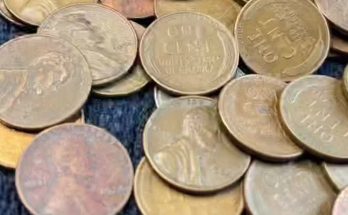
- 🏦 Bank coin rolls
- 📦 Inherited collections
- 🏠 Old jars or drawers
- 🪙 Everyday circulation (rarely)
Most are found accidentally, not intentionally collected.
⚠️ Critical Collector Warnings
Before you assume you’ve found one:
- ❌ Do NOT clean the coin
- ❌ Do NOT polish or alter surfaces
- 📸 Take high-resolution photos instead
- 🏆 Always verify through PCGS or NGC
Cleaning or alteration can destroy most of the coin’s value instantly.
🧭 What To Do If You Find a Suspected Error Coin
If your penny shows possible doubling:
- 📸 Photograph both sides clearly
- 🔍 Compare with verified reference examples
- 📦 Store safely in a coin holder
- 🏆 Submit for professional grading
- 💰 Only then consider selling
Authentication determines real market value.
🎯 Double Liberty Penny Insight (Replaces “Final Thoughts”)
The “Double Liberty” penny highlights a core truth in numismatics:
👉 Small minting imperfections can create major collector value.
Most pennies are ordinary—but a few carry hidden production anomalies that collectors actively search for.
A quick inspection of your change could be the difference between 1 cent and a five-figure collectible. 🪙✨
Leave a Reply